Digital Legacy
We Thought We'd Always Have His Voice
My grandfather finally recorded the stories he rarely told. We had the phone. We hadn't thought about saving a copy.
3 min read
On this page
My grandfather didn’t talk about Vietnam for about fifty years. Not at Thanksgiving. Not when the family got together. There were things we knew he’d lived through, but we knew very little about them.
Then, in his seventies, he got a smartphone. He started recording himself telling the stories he’d kept to himself for so long. About the jungle. About the friends who didn’t come home. Things I couldn’t have learned from a photograph.
When he died, we buried him with full military honors. We still had his phone, and somewhere on it were those recordings.
We hadn’t thought of saving them as something we needed to do. By the time we did, the phone wouldn’t turn on, and we no longer had the passcode.
I don’t know whether those files could still be recovered. What I know is that we can’t play them now. Having the phone had felt like having his voice. We hadn’t understood that those were two different things.
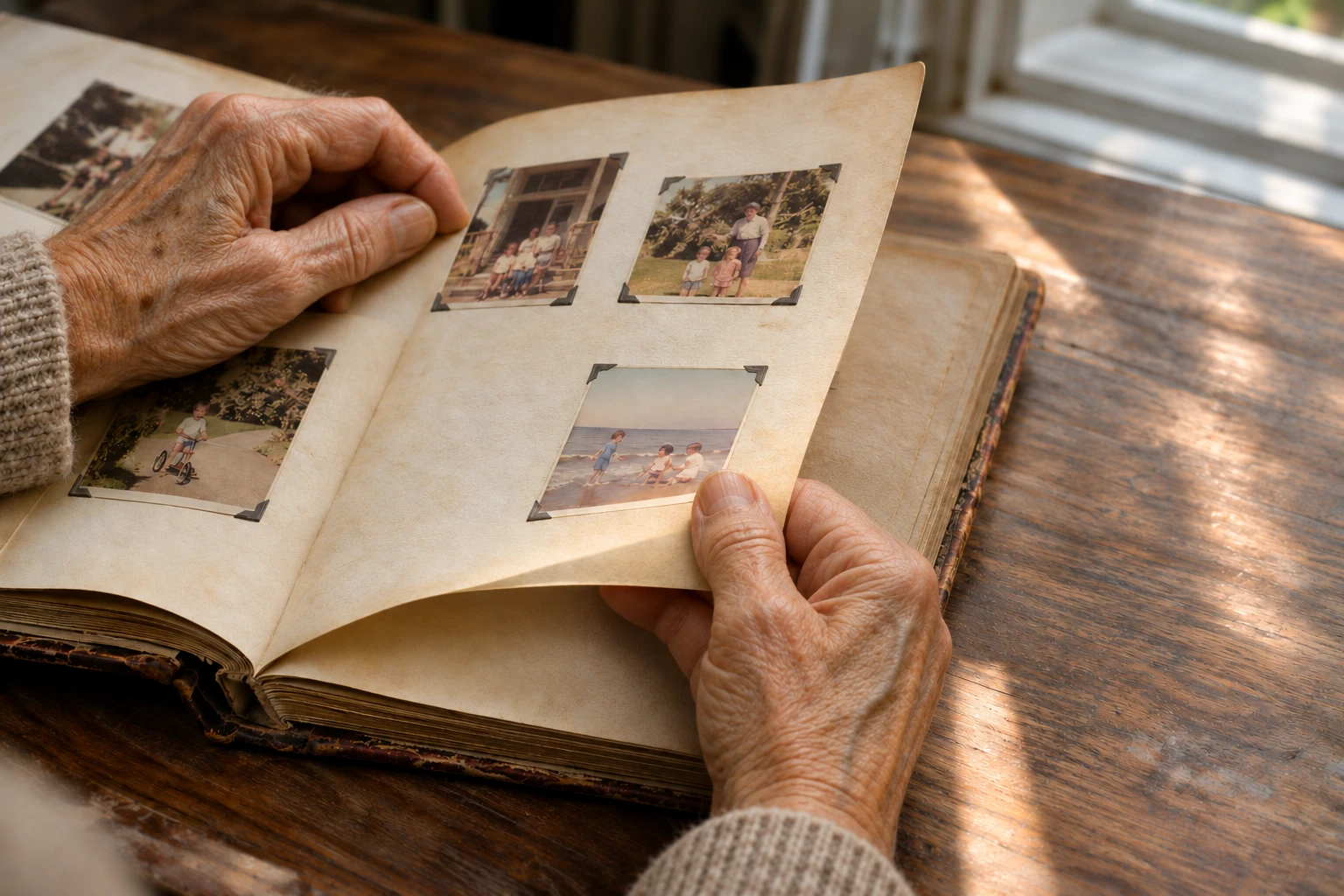
What I wish we’d kept
I think about the sound of him telling a story. The pauses. The way he’d say a name. A transcript could tell me the words, but it couldn’t quite give me that.
And it doesn’t have to be a story about a war. It can be someone laughing in the background of a video, a birthday message, or an ordinary conversation you never thought to save. You don’t always know which part you’ll miss.
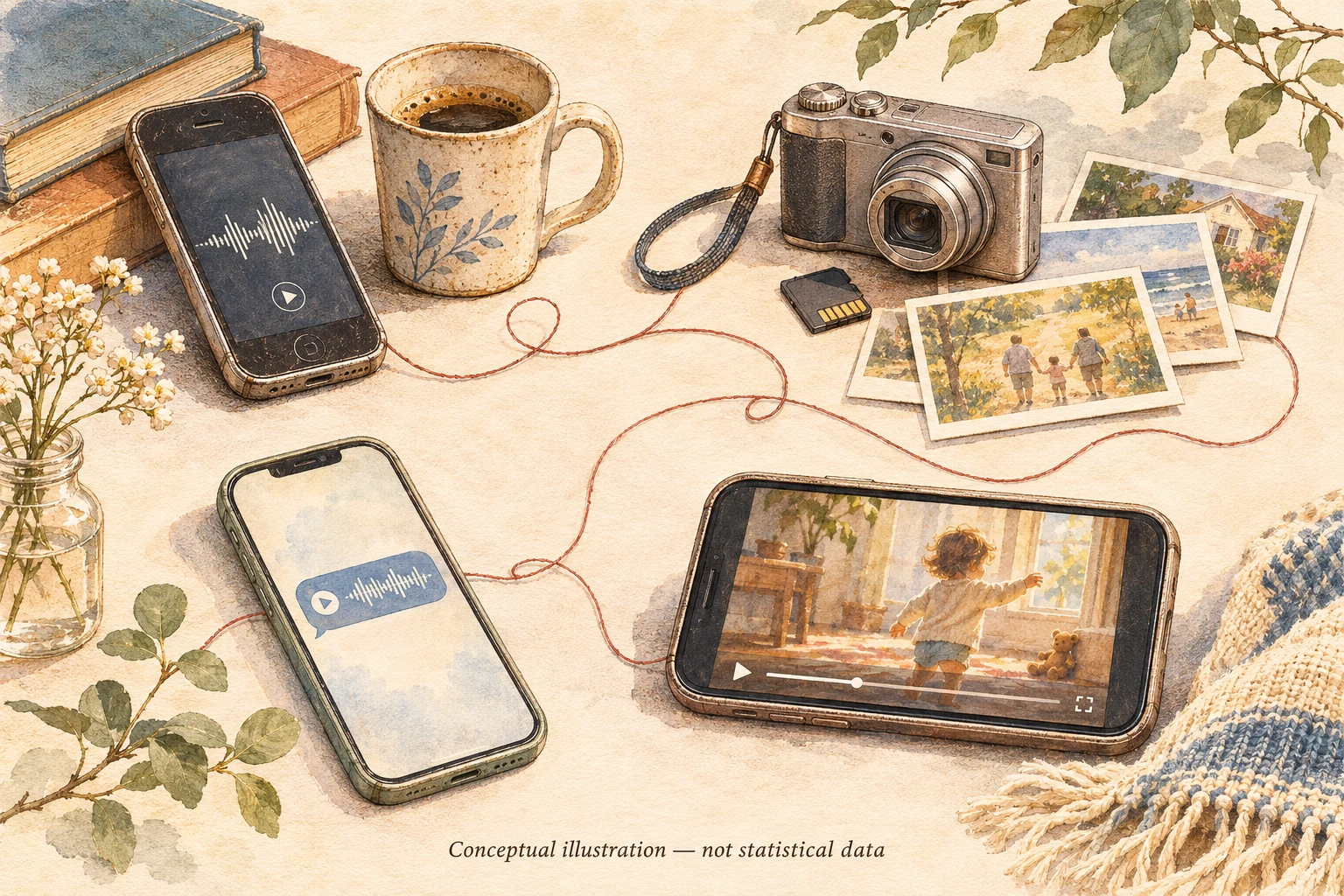
Think about where those things live in your own family. A recording on an old phone. Photos on a camera card. A voice message inside a chat. A child’s first steps on a parent’s screen. Someone might know where each one is. That doesn’t mean everyone else does.
We kept putting it off
I understand why we didn’t act sooner. We weren’t choosing to lose anything. We simply hadn’t made saving it a task of its own. The phone was there. We assumed we could come back to it.
I’ve caught myself doing the same thing with my own files. I’ll sort those photos later. I’ll copy that conversation when I change phones. There’s always something more urgent than organizing a folder that appears to be fine.
What I wish we’d asked is quite small: if this phone stopped working tomorrow, where else could we listen? And would someone else in the family know where to look?
That experience is why I’m building MemoraKeep. I want to make family memories easier to gather, preserve, and pass on. That’s the direction I’m working toward. An app can’t promise that everything will last forever, and it can’t undo what happened to my grandfather’s phone. You can see what it does today on the features page.
Start with one voice
You don’t have to organize a lifetime tonight. Choose one recording, photo, or video you’d hate to lose. Save a copy somewhere separate from the phone holding it. Open that copy and check that it plays or displays properly.
Give it a name that will make sense to someone else. A person’s name, a date if you know it, a sentence about the occasion. Tell someone you trust where it is, and arrange a secure way for them to get to it when needed. Keep another copy in a separate place, and check the files again from time to time.
Respect the person in the recording, too. Something worth keeping isn’t automatically something to share publicly. If you need a little help choosing what to keep, I’ve put together some practical steps for saving family conversations.
I would give a lot to hear my grandfather tell those stories again. For now, I can’t. But there may be a voice you can still save today. Start there.
- family
- memories
- digital legacy